

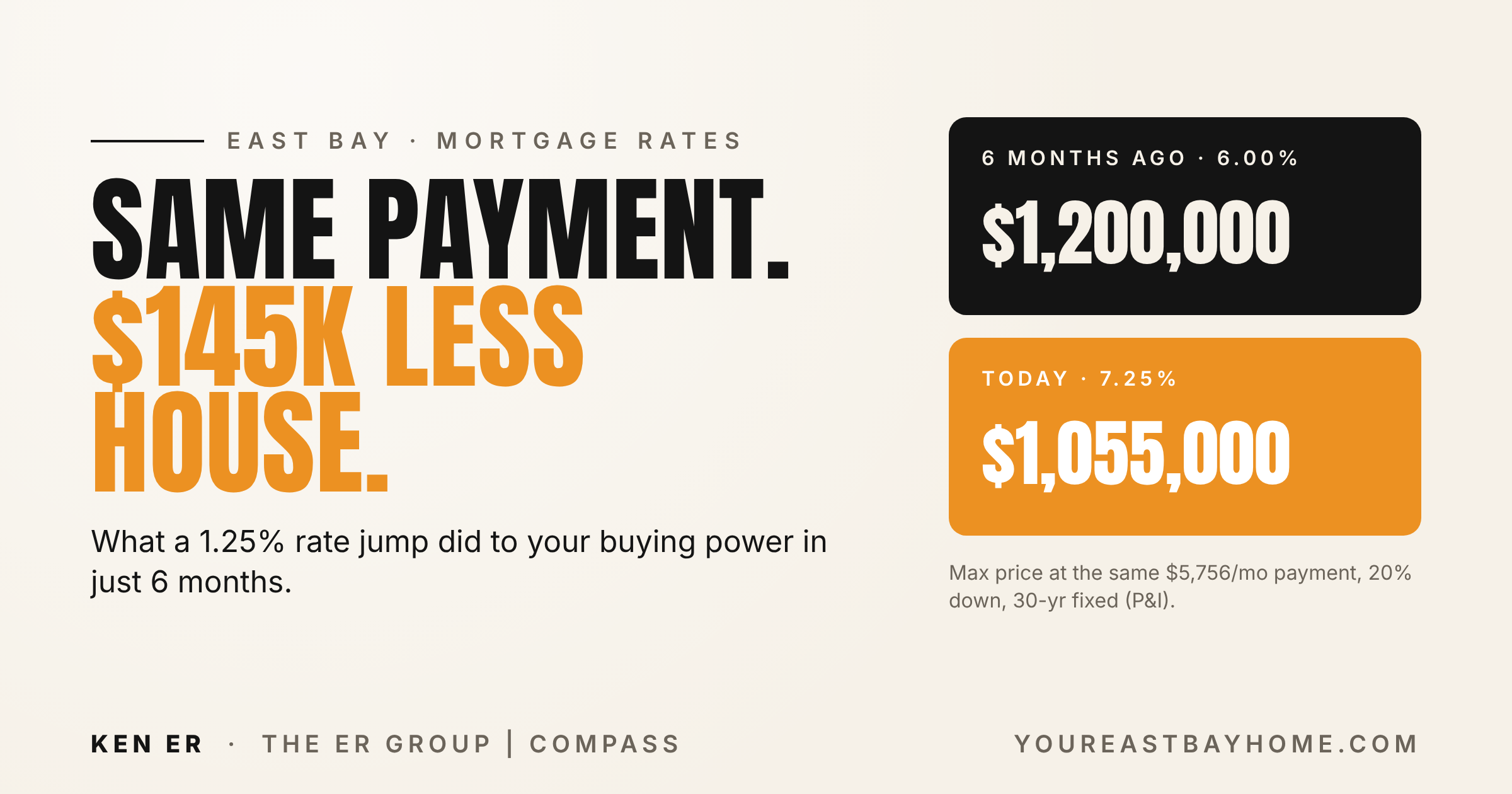

If your monthly budget hasn’t changed since spring, you can now afford about $145,000 less house. That’s what a 1.25-point jump in mortgage rates did in just six months.
Six months ago, 30-year rates were around 6%. A month ago they were 6.5%. Today they’re 7.25% and still climbing. Home prices haven’t moved much, but what buyers can pay for a home has.
Below, I walk through one real-world example: a $1.2 million East Bay home with 20% down. I show the payment at each rate and how much buying power disappeared. Then I cover what it means for you, whether you’re buying or selling.
The same home at three different rates
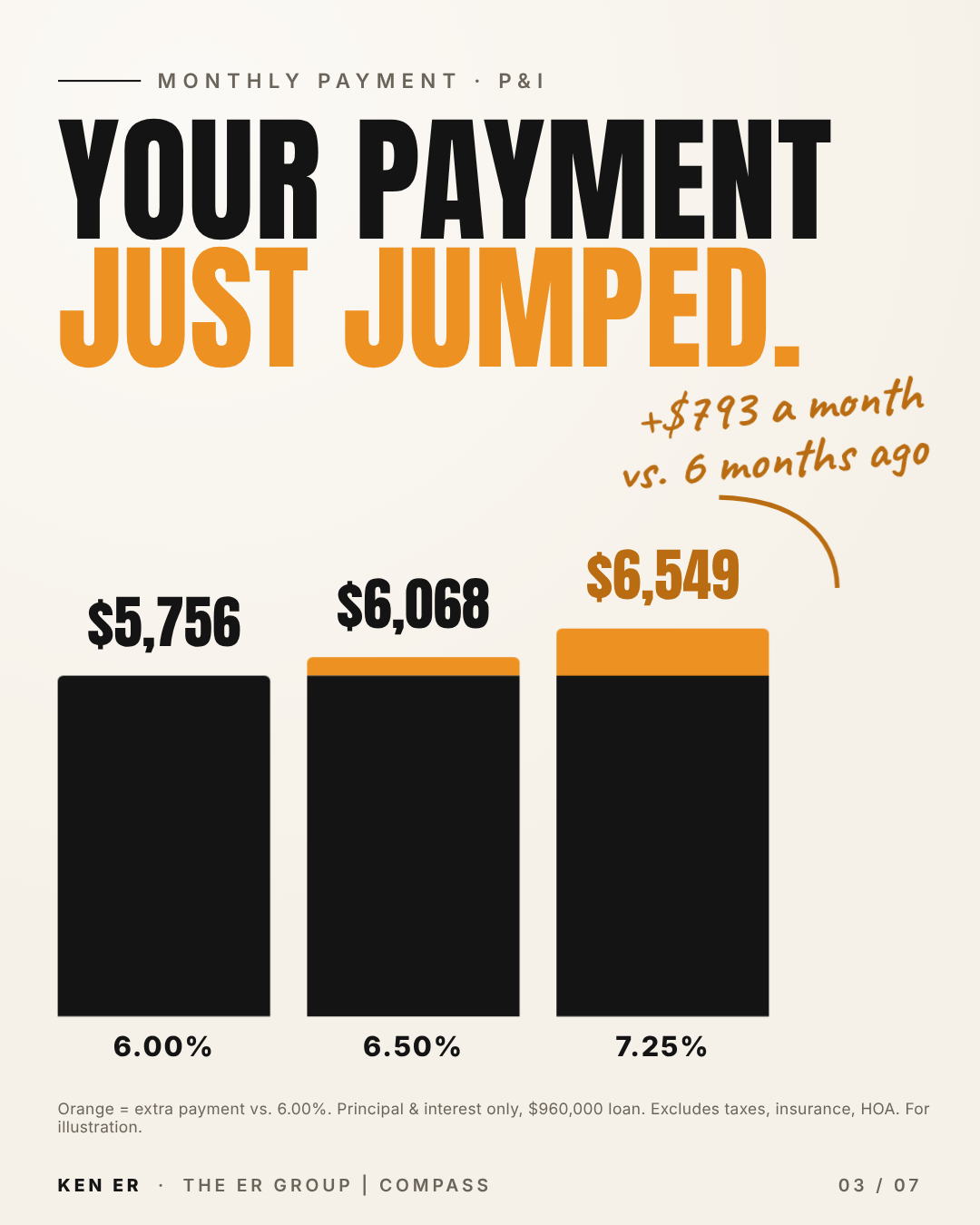
On a $1.2 million home, today’s rate adds $793 a month compared with six months ago. That’s $9,518 a year.
The setup: a $1,200,000 purchase price, 20% down ($240,000), and a $960,000 30-year fixed loan. Nothing changes except the rate.
| 6 months ago | 1 month ago | Today | |
|---|---|---|---|
| Rate | 6.00% | 6.50% | 7.25% |
| Monthly payment (P&I) | $5,756 | $6,068 | $6,549 |
| Extra vs. 6 months ago | — | +$312/mo | +$793/mo |
| Total interest over 30 years | $1.11M | $1.22M | $1.40M |

Over the full life of the loan, the 7.25% borrower pays about $286,000 more in interest than the 6% borrower did, for the exact same house.
These figures are principal and interest only. Property taxes, homeowners insurance and any HOA dues come on top and are the same in every scenario, so I’ve left them out to keep the comparison clean.
How much house your budget buys now
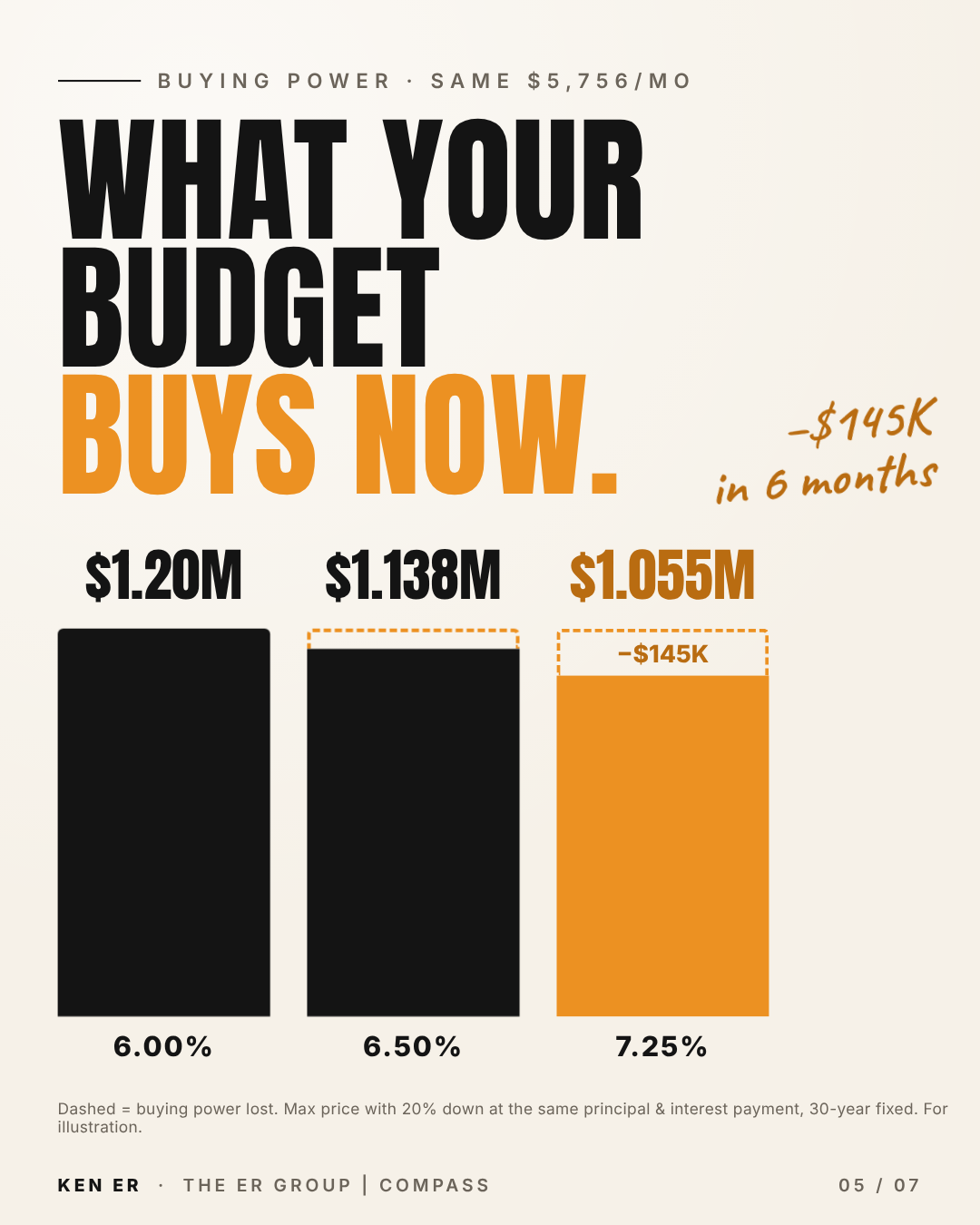
The payment that bought a $1.2 million home six months ago now buys about $1,055,000. That’s 12% less house.
Most buyers don’t start with a price. They start with a monthly number they’re comfortable with. So here’s the more useful way to look at it: hold the payment at $5,756 and see what price it supports at each rate, with 20% down.
| Rate | Max price at $5,756/mo | Buying power lost |
|---|---|---|
| 6.00% (6 months ago) | $1,200,000 | — |
| 6.50% (1 month ago) | $1,138,000 | −$62,000 |
| 7.25% (today) | $1,055,000 | −$145,000 |
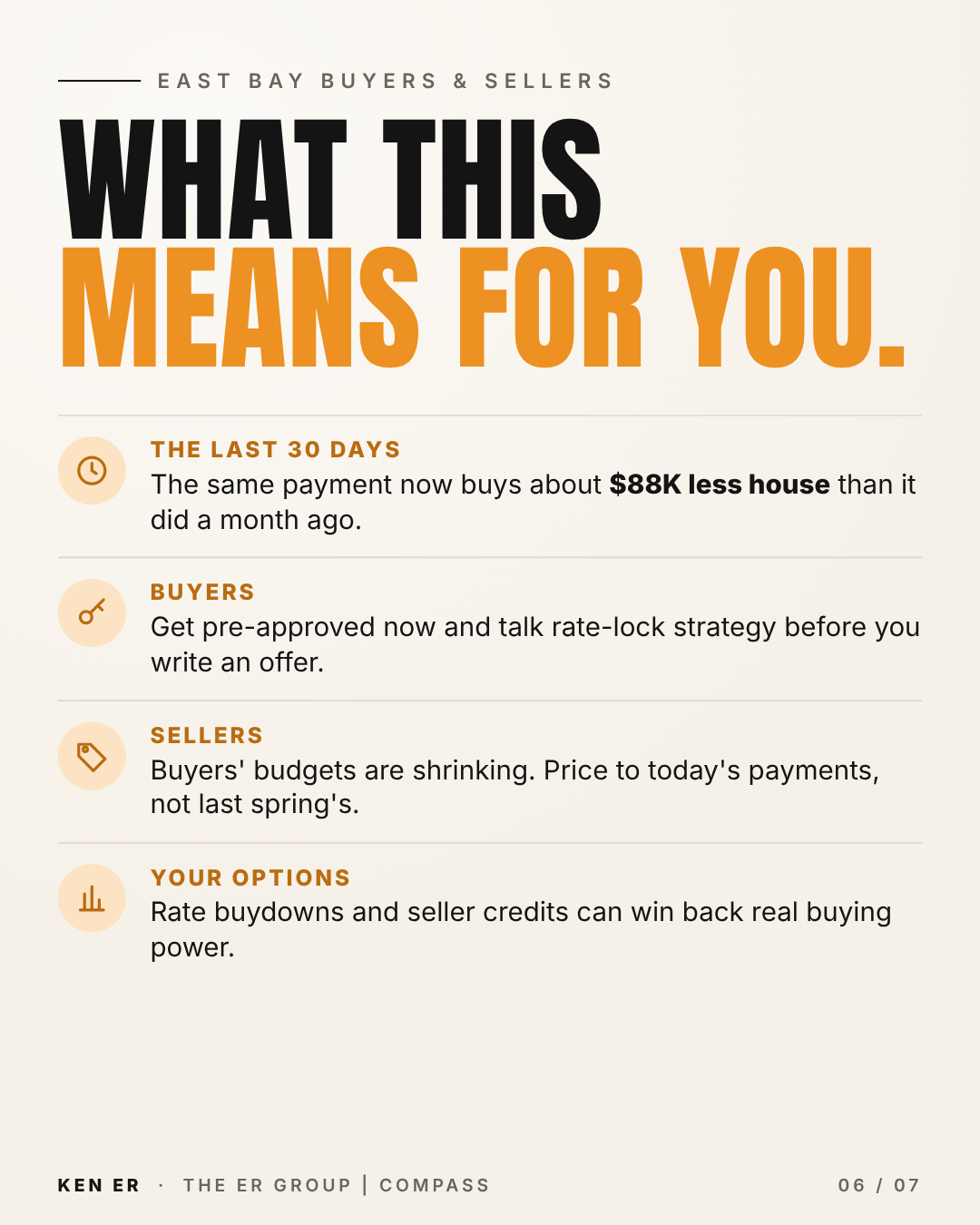
The last month alone was costly. A buyer who could afford a $1.2 million home at 6.5% a month ago now gets about $1,112,000 for the same payment. That’s roughly $88,000 of buying power gone in 30 days.
What this means for buyers
You don’t need to panic, but you do need a plan. Rising rates reward buyers who know their real numbers and move with a strategy.
• Get re-approved at today’s rate. A pre-approval from spring was likely written at a lower rate. Your approval amount may have dropped, and you want to know that before you fall in love with a house.
• Shop by payment, not price. Decide the monthly number you’re comfortable with, then work backward to a price range. It keeps you from stretching on a home that only worked at last month’s rate.
• Ask about a rate buydown. Paying points up front can lower your rate for the life of the loan. A temporary buydown (such as a 2-1) lowers the payment for the first year or two. Your lender can show you the breakeven on each.
• Negotiate for seller credits. A credit toward closing costs or a buydown can be worth more to you than the same amount off the price, because it lowers your monthly payment directly.
• Compare loan types. Adjustable-rate mortgages with a fixed period (5, 7 or 10 years) often start lower than a 30-year fixed. They carry risk when they adjust, so make sure you understand the terms.
• Have a rate-lock strategy. When rates are climbing, a few days between offer and lock can change your payment. Talk with your lender about when to lock and what a float-down option costs.
One more thing: fewer buyers can afford the same homes right now. That can mean less competition and more room to negotiate on homes that have been sitting.
What this means for sellers
Your buyer’s budget shrank even if your home’s value didn’t. The buyer who could comfortably pay $1.2 million in the spring may now top out near $1.05 million at the same monthly payment.
• Price for today’s payments, not last spring’s comps. Comparable sales from a few months ago closed at lower rates. Pricing off them alone can leave your home sitting while the market moves on.
• Offer credits instead of cutting price. A credit that buys down the buyer’s rate can lower their payment more than an equal price reduction does. It can also protect the sale price that future comps will be based on.
• Make it easy to say yes. Buyers stretched by higher payments have less cash left for repairs. A well-prepared, move-in-ready home stands out, and pre-listing inspections help reduce surprises during escrow.
• Watch your days on market. If showings are steady but offers aren’t coming, it’s usually a price-to-payment problem, not a marketing problem. Adjust early rather than chasing the market down.
• Be flexible on terms. Closing timelines, rent-backs and credits can bridge a gap that price alone can’t.
The sellers doing best right now are the ones who meet buyers where their monthly budget actually is.
The bottom line
Rates move the market faster than prices do. In six months, the same monthly payment went from buying a $1.2 million home to buying about $1.05 million, and most of that loss happened in the last 30 days.
Whether you’re buying or selling in the East Bay, the right move starts with your real numbers at today’s rates. Send me a message with the word “RATES” and I’ll run your exact budget, or your home’s likely buyer pool, at today’s rates.
Ken Er · The Er Group | Compass · DRE# 01942269 · youreastbayhome.com
Figures are for illustration only: principal and interest on a 30-year fixed loan with 20% down, excluding taxes, insurance and HOA dues. Rates reflect general market levels at the time of writing and change daily. Your rate and payment depend on your credit, loan type and lender. This is not a loan offer or financial advice; talk with a licensed lender about your situation.