


After the Loma Prieta earthquake of 1989 12,000 Bay Area residents found themselves displaced permanently or temporarily. Of those whose homes remained intact, many were temporarily without water, electricity and phone service. The large volume of smaller earthquakes in the San Ramon area serve as a reminder that we live in earthquake country and that it never hurts to be prepared.
In order to prepare for a major earthquake, we complied a list of supplies the American Red Cross recommends you keep on hand.
WATER
-
Store water in plastic containers such as soft drink bottles. Avoid using containers that will decompose or break, such as milk cartons or glass bottles. A normally active person needs to drink at least two quarts of water each day. Hot environments and intense physical activity can double that amount. Children, nursing mothers, and ill people will need more.
Store one gallon of water per person per day. Don’t forget your pets.
Keep at least a three-day supply of water per person (two quarts for drinking, two quarts for each person in your household for food preparation/sanitation).
Change this water every six months.
Use household liquid bleach to kill microorganisms: Use only regular household liquid bleach that contains 5.25 percent sodium hypochlorite. Do not use scented bleaches, colorsafe bleaches or bleaches with added cleaners.
Add 16 drops of bleach per gallon of water, stir and let stand for 30 minutes. If the water does not have a slight bleach odor, repeat the dosage and let stand another 15 minutes.
The only agent used to treat water should be household liquid bleach. Other chemicals, such as iodine or water treatment products sold in camping or surplus stores that do not contain 5.25 percent sodium hypochlorite as the only active ingredient, are not recommended and should not be used.
FOOD
-
Ready-to-eat canned meats, fruits, vegetables.
Canned juices, milk, soup
Sugar, salt, pepper
High-energy foods such as peanut butter, jelly, crackers, granola bars, trail mix; foods that will not increase thirst.
Vitamins
Foods for infants, elderly, persons with special dietary needs
Comfort/stress foods: cookies, hard candy, sweetened cereals, lollipops, instant coffee, tea bags.
Pet food, at least one ounce per animal pound per day.
Avoid foods like rice, pasta and dry beans that require a great deal of water to prepare. Remember to restock your food once a year.
FIRST AID KIT
-
Sterile adhesive bandages in assorted sizes
Assorted sizes of safety pins
Cleansing agent/soap
Latex gloves (2 pairs)
Sunscreen
2-inch sterile gauze pads (4-6)
4-inch sterile gauze pads (4-6)
Triangular bandages (3)
Non-prescription drugs such as Pain relievers, Anti-diarrhea medicines, Antacid, Syrup of Ipecac (used to induce vomiting with the advice of a Poison Control Center), Laxatives, Activated charcoal (used with advice from the Poison Control Center)
Various roller bandages
Scissors
Tweezers
Needle
Moistened towelettes
Antiseptic
Thermometer
Tongue blades (2)
Tube of petroleum jelly or other lubricant
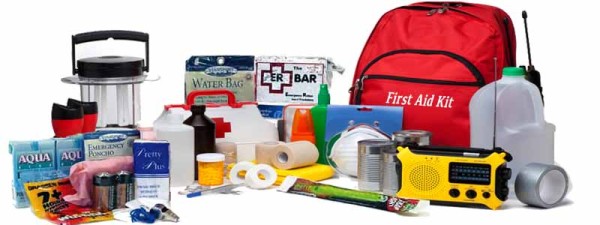
TOOLS AND SUPPLIES
-
Paper cups, plates, and plastic utensils
Battery-operated radio and extra batteries
Flashlight and extra batteries
Cash or traveler’s checks, in case banks are closed in the days following an earthquake
Non-electric can opener or a utility knife
Small fire extinguisher
Pliers
Tape
Matches in a waterproof container
Aluminum foil
Plastic storage containers
Signal flare
Paper, pencil
Needles, thread
Medicine dropper
Wrench, to turn off gas and water
SANITATION
-
Toilet paper
Soap, liquid detergent
Feminine supplies
Plastic garbage bags and ties
Plastic bucket with tight lid
Disinfectant
Household chlorine bleach
Poop bags and scooper for pet waste
CLOTHING AND BEDDING
-
Sturdy shoes or work boots (keep near your bed)
Rain gear
Blankets or sleeping bags
Warm clothing
Sunglasses (keep your spare eyeglasses in the emergency kit, too.)
DOCUMENTS
-
Will, insurance policies, contracts deeds, stocks and bonds
Passports, social security cards, immunization records
Bank account numbers
Credit card account numbers and companies
Inventory of valuable household goods, important telephone numbers
Family records (birth, marriage, death certificates)
**Remember to include special needs family members such as a baby or an older person might have. It is also good to store in a waterproof plastic bag important family documents (passports, wills, medical records etc.) along with your earthquake survival kit.
SOURCE: Chronicle, American Red Cross, Disaster Preparedness Handbook, City of Berkeley